Trending...
- Los Angeles County to Begin Distributing Vote by Mail Ballots to Registered Voters in Long Beach Beginning April 30
- As Trump destroys the planet and green jobs, Governor Newsom announces California joins world's largest environmental protection organization
- UVIFY and Electric Sky Drone Shows Sponsor Palm Springs Drone Fest 2026
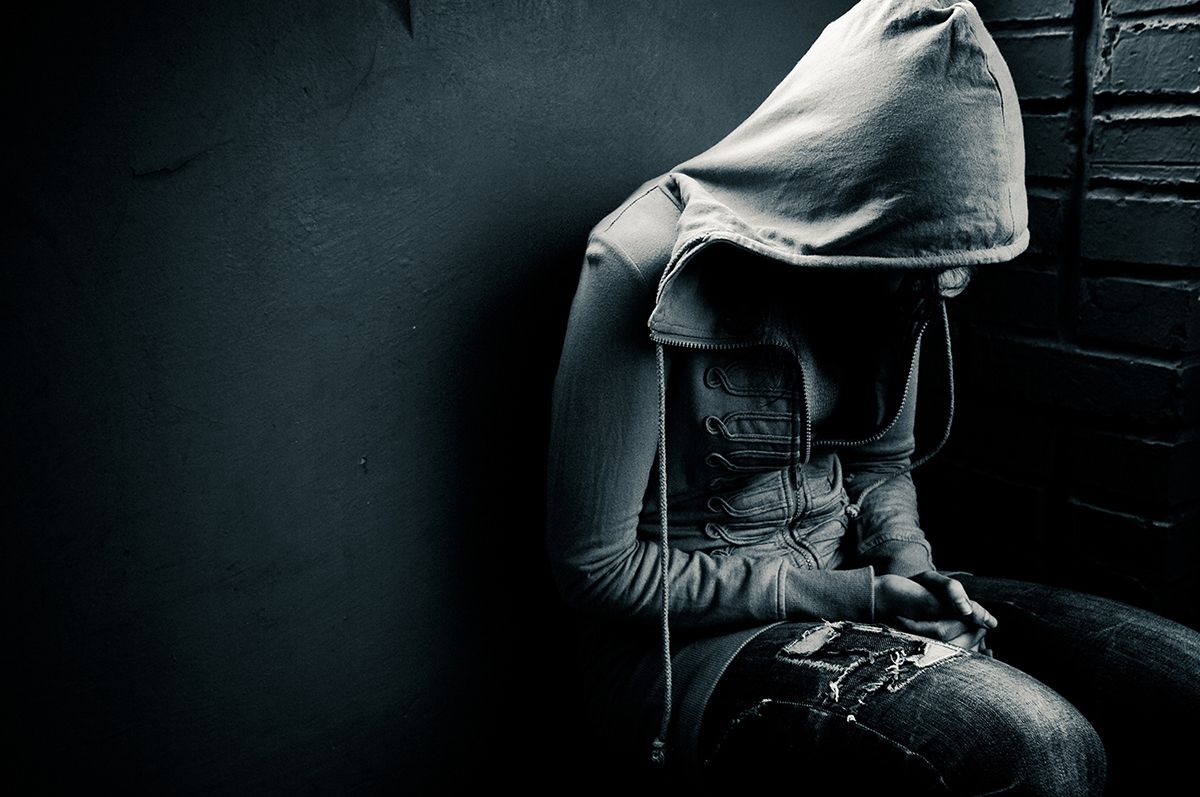
New report cites abuse, deaths, fraud, and systemic regulatory failure; backs Senate BRIDGES for Kids Act
LOS ANGELES - Californer -- By CCHR International
A sweeping new white paper released by the Citizens Commission on Human Rights International (CCHR) warns lawmakers that abuse, neglect, preventable deaths, and fraud remain endemic in the troubled teen treatment industry and for-profit psychiatric hospitals, despite years of warnings, litigation, and media investigations.
The report calls for mandatory transparency, automatic enforcement triggers, criminal accountability, and the withdrawal of public funding from facilities that harm children and vulnerable adults—arguing that reform without enforcement has repeatedly failed.
CCHR welcomed the recent introduction of the BRIDGES for Kids Act, sponsored by U.S. Senator Ron Wyden, describing the legislation as "long overdue" after decades of documented abuse across residential treatment centers and psychiatric hospitals.[1]
"The evidence is overwhelming," said Jan Eastgate, president of CCHR International. "This is not a problem of a few bad actors. It is a systemic psychiatric failure driven by a profit-based institutional model that has operated with minimal oversight and little accountability, and often at taxpayer expense."
The BRIDGES for Kids Act would require the U.S. Department of Health and Human Services to establish a national, publicly accessible dashboard disclosing inspection results, restraint and seclusion use, staffing levels, licensing status, and serious complaints. States would be required to respond to critical complaints within 48 hours and initiate investigations when violations are identified.
CCHR's white paper documents why such measures are needed: up to 45% of inpatient mental health patients reported experiencing sexual violence during admission.[2] Separately, the Joint Commission reported a 77% increase in hospital assault incidents over two years, with nearly half involving sexual assault.[3]
"These are not isolated incidents," Eastgate states. "They reflect a regulatory vacuum in which abuse becomes predictable rather than exceptional."
The white paper highlights escalating litigation and criminal prosecutions involving some of the nation's largest for-profit psychiatric hospital chains.
More on The Californer
In January 2026, a Pennsylvania court ordered a trial to proceed against a former employee at one facility, charged with felony child endangerment and aggravated assault following an alleged assault captured on surveillance video.[4]
In Illinois and Virginia, juries returned awards totaling hundreds of millions of dollars to patients sexually abused in for-profit psychiatric hospitals, citing chronic understaffing, inadequate supervision, and cost-cutting practices that placed children at extreme risk.
"From a fiduciary standpoint, these companies and psychiatrists treating children and teens represent extraordinary legal and reputational risk," Eastgate explained. "From an ethical standpoint, no level of profit justifies investment in behavioral institutions repeatedly linked to child abuse."
CCHR's report devotes substantial attention to other major for-profit operators that were scrutinized in a 2024 U.S. Senate investigation titled Warehouses of Neglect, which concluded that abuse in youth residential treatment facilities occurs "inevitably and by design" due to a business model that treats children as revenue streams.[5]
Since then, one major chain has faced facility closures following allegations of sexual assault, and enforcement actions by the U.S. Securities and Exchange Commission and Department of Justice. Investigations by The New York Times detailed alleged overbilling, falsified records, and coercive confinement to maximize insurance reimbursement.[6]
Despite these findings, CCHR's report notes that more than 70% of one hospital chain's revenue continues to come from Medicaid and Medicare.
Beyond individual cases, CCHR's report identifies what it calls the underlying source of the crisis: a psychiatric system that offers no scientifically demonstrable cures and instead relies on prolonged institutionalization, behavioral control, and drug-centered management. "When treatment does not resolve illness, facilities profit by extending confinement—not by achieving recovery," the report states. "In for-profit settings, this creates incentives for understaffing, coercion, and neglect. Abuse is not aberrational; it is structural."
The white paper concludes with a call for immediate legislative and regulatory action:
NBC News reported that if enacted, the BRIDGES for Kids Act would direct federal investigators to examine how often states send children across state lines to facilities with documented abuse histories. "Decades of evidence show that voluntary compliance does not work," CCHR said.
More on The Californer
The group, which was established in 1969 by the Church of Scientology and professor of psychiatry, Dr. Thomas Szasz, also concludes: "Without enforceable standards, real penalties, and the withdrawal of public funding, abuse will continue. Legislators now have the evidence—and the responsibility—to act."
Sources:
[1] Tyler Kingkade, "Senate bill aims to expose abuse at residential treatment centers for children," NBC News, 18 Dec. 2025, www.nbcnews.com/news/us-news/senate-bill-abuse-residential-treatment-facilities-rcna249636; "New Senate Bill Targets 'Troubled Teen' Industry and Residential Treatment Abuse," MindSite News, 7 Jan. 2026, mindsitenews.org/2026/01/07/new-senate-bill-targets-troubled-teen-industry-and-residential-treatment-abuse/
[2] Holly Betterly, et al., "Sexual assault in the inpatient psychiatric setting," General Hospital Psychiatry, Vol. 82, May–June 2023, www.sciencedirect.com/science/article/abs/pii/S0163834323000270
[3] Gretchen Morgenson, "Lean staffing, lax hiring, training flaws: Why sexual assaults at hospitals are up," NBC News, 18 Nov. 2024, www.nbcnews.com/health/health-care/lean-staffing-lax-hiring-training-flaws-assaults-hospitals-are-rcna171055
[4] "Charges held for trial for behavioral health worker accused of assaulting juvenile," North Penn Now, 7 Jan. 2026, northpennnow.com/news/2026/jan/07/charges-held-for-trial-for-behavioral-health-worker-accused-of-assaulting-juvenile/
[5] Chris Larson, "Senate Finance Committee Releases Excoriating Investigation of Abuse in At-Risk Youth Industry," Behavioral Health Business, 12 June 2024, bhbusiness.com/2024/06/12/senate-finance-committee-releases-excoriating-investigation-of-abuse-in-at-risk-youth-industry/
[6] "US SEC hits 7 public companies with penalties for violating whistleblower protections," U.S. Securities and Exchange Commission, 9 Sept. 2024, www.sec.gov/newsroom/press-releases/2024-118; Acadia Healthcare Company Inc. to Pay $19.85M to Settle Allegations Relating to Medically Unnecessary Inpatient Behavioral Health Services," Dept. of Justice, 26 Sept. 2024, www.justice.gov/archives/opa/pr/acadia-healthcare-company-inc-pay-1985m-settle-allegations-relating-medically-unnecessary; Jessica Silver-Greenberg and Katie Thomas, "Suicides... at a Prized Mental Health Center," The New York Times, 22 Apr. 2025
A sweeping new white paper released by the Citizens Commission on Human Rights International (CCHR) warns lawmakers that abuse, neglect, preventable deaths, and fraud remain endemic in the troubled teen treatment industry and for-profit psychiatric hospitals, despite years of warnings, litigation, and media investigations.
The report calls for mandatory transparency, automatic enforcement triggers, criminal accountability, and the withdrawal of public funding from facilities that harm children and vulnerable adults—arguing that reform without enforcement has repeatedly failed.
CCHR welcomed the recent introduction of the BRIDGES for Kids Act, sponsored by U.S. Senator Ron Wyden, describing the legislation as "long overdue" after decades of documented abuse across residential treatment centers and psychiatric hospitals.[1]
"The evidence is overwhelming," said Jan Eastgate, president of CCHR International. "This is not a problem of a few bad actors. It is a systemic psychiatric failure driven by a profit-based institutional model that has operated with minimal oversight and little accountability, and often at taxpayer expense."
The BRIDGES for Kids Act would require the U.S. Department of Health and Human Services to establish a national, publicly accessible dashboard disclosing inspection results, restraint and seclusion use, staffing levels, licensing status, and serious complaints. States would be required to respond to critical complaints within 48 hours and initiate investigations when violations are identified.
CCHR's white paper documents why such measures are needed: up to 45% of inpatient mental health patients reported experiencing sexual violence during admission.[2] Separately, the Joint Commission reported a 77% increase in hospital assault incidents over two years, with nearly half involving sexual assault.[3]
"These are not isolated incidents," Eastgate states. "They reflect a regulatory vacuum in which abuse becomes predictable rather than exceptional."
The white paper highlights escalating litigation and criminal prosecutions involving some of the nation's largest for-profit psychiatric hospital chains.
More on The Californer
- City of Long Beach Deploys First-Ever Zero-Emissions Collections Trucks in New Pilot Program
- California: Governor Newsom celebrates launch of western regional energy market, designed to deliver lower energy costs and strengthen electric grid
- 1,000 Kids in Santa Clara County Need a Hero — This Race Is How Silicon Valley Answers the Call
- Ventura County Community College District Vice Chancellor Named Educational Leader of the Year
- California: Governor Newsom announces 180+ affordable homes in Los Angeles, more planned for San Francisco
In January 2026, a Pennsylvania court ordered a trial to proceed against a former employee at one facility, charged with felony child endangerment and aggravated assault following an alleged assault captured on surveillance video.[4]
In Illinois and Virginia, juries returned awards totaling hundreds of millions of dollars to patients sexually abused in for-profit psychiatric hospitals, citing chronic understaffing, inadequate supervision, and cost-cutting practices that placed children at extreme risk.
"From a fiduciary standpoint, these companies and psychiatrists treating children and teens represent extraordinary legal and reputational risk," Eastgate explained. "From an ethical standpoint, no level of profit justifies investment in behavioral institutions repeatedly linked to child abuse."
CCHR's report devotes substantial attention to other major for-profit operators that were scrutinized in a 2024 U.S. Senate investigation titled Warehouses of Neglect, which concluded that abuse in youth residential treatment facilities occurs "inevitably and by design" due to a business model that treats children as revenue streams.[5]
Since then, one major chain has faced facility closures following allegations of sexual assault, and enforcement actions by the U.S. Securities and Exchange Commission and Department of Justice. Investigations by The New York Times detailed alleged overbilling, falsified records, and coercive confinement to maximize insurance reimbursement.[6]
Despite these findings, CCHR's report notes that more than 70% of one hospital chain's revenue continues to come from Medicaid and Medicare.
Beyond individual cases, CCHR's report identifies what it calls the underlying source of the crisis: a psychiatric system that offers no scientifically demonstrable cures and instead relies on prolonged institutionalization, behavioral control, and drug-centered management. "When treatment does not resolve illness, facilities profit by extending confinement—not by achieving recovery," the report states. "In for-profit settings, this creates incentives for understaffing, coercion, and neglect. Abuse is not aberrational; it is structural."
The white paper concludes with a call for immediate legislative and regulatory action:
- Mandatory transparency, including national reporting of restraints, seclusion, injuries, deaths, staffing, and ownership structures
- Automatic enforcement triggers, including license suspension or closure following credible allegations of serious harm
- Criminal and civil accountability, including individual liability for executives and clinicians where systemic abuse is documented
- Elimination of seclusion and mechanical restraint, consistent with calls from medical and human rights experts
- Federal investigations by the GAO and HHS Office of Inspector General into marketing practices and billing incentives.
NBC News reported that if enacted, the BRIDGES for Kids Act would direct federal investigators to examine how often states send children across state lines to facilities with documented abuse histories. "Decades of evidence show that voluntary compliance does not work," CCHR said.
More on The Californer
- Long Beach Parks, Recreation and Marine Issues Updated Operating Hours for Parks Reservation and Registration Office
- Why Athletic Recovery Begins in the Nervous System
- A Hidden Magical World Awaits in Ashley Gayheart's Upcoming Young Adult Fantasy, Rosewood Academy: The Awakening
- Scott Ritsema of Bisnar Chase Selected for 2026 National Traumatic Brain Injury Association
- Datacate Launches Free IT Asset Disposition (ITAD) Services for Secure Hardware Disposal
The group, which was established in 1969 by the Church of Scientology and professor of psychiatry, Dr. Thomas Szasz, also concludes: "Without enforceable standards, real penalties, and the withdrawal of public funding, abuse will continue. Legislators now have the evidence—and the responsibility—to act."
Sources:
[1] Tyler Kingkade, "Senate bill aims to expose abuse at residential treatment centers for children," NBC News, 18 Dec. 2025, www.nbcnews.com/news/us-news/senate-bill-abuse-residential-treatment-facilities-rcna249636; "New Senate Bill Targets 'Troubled Teen' Industry and Residential Treatment Abuse," MindSite News, 7 Jan. 2026, mindsitenews.org/2026/01/07/new-senate-bill-targets-troubled-teen-industry-and-residential-treatment-abuse/
[2] Holly Betterly, et al., "Sexual assault in the inpatient psychiatric setting," General Hospital Psychiatry, Vol. 82, May–June 2023, www.sciencedirect.com/science/article/abs/pii/S0163834323000270
[3] Gretchen Morgenson, "Lean staffing, lax hiring, training flaws: Why sexual assaults at hospitals are up," NBC News, 18 Nov. 2024, www.nbcnews.com/health/health-care/lean-staffing-lax-hiring-training-flaws-assaults-hospitals-are-rcna171055
[4] "Charges held for trial for behavioral health worker accused of assaulting juvenile," North Penn Now, 7 Jan. 2026, northpennnow.com/news/2026/jan/07/charges-held-for-trial-for-behavioral-health-worker-accused-of-assaulting-juvenile/
[5] Chris Larson, "Senate Finance Committee Releases Excoriating Investigation of Abuse in At-Risk Youth Industry," Behavioral Health Business, 12 June 2024, bhbusiness.com/2024/06/12/senate-finance-committee-releases-excoriating-investigation-of-abuse-in-at-risk-youth-industry/
[6] "US SEC hits 7 public companies with penalties for violating whistleblower protections," U.S. Securities and Exchange Commission, 9 Sept. 2024, www.sec.gov/newsroom/press-releases/2024-118; Acadia Healthcare Company Inc. to Pay $19.85M to Settle Allegations Relating to Medically Unnecessary Inpatient Behavioral Health Services," Dept. of Justice, 26 Sept. 2024, www.justice.gov/archives/opa/pr/acadia-healthcare-company-inc-pay-1985m-settle-allegations-relating-medically-unnecessary; Jessica Silver-Greenberg and Katie Thomas, "Suicides... at a Prized Mental Health Center," The New York Times, 22 Apr. 2025
Source: Citizens Commission on Human Rights International
Filed Under: Consumer, Medical, Health, Government, Science, Citizens Commission On Human Rights, CCHR International
0 Comments
Latest on The Californer
- Your Email List Is a Revenue Engine You Haven't Turned On Yet
- Campus Bookstores at the Ventura County Community College District Now Accepting CalFresh Benefits
- City Announces Grand Marshals for 2026 Long Beach Pride Parade
- New Homesites Released at Heritage at Manalapan Featuring Scenic Golf Course Views
- Emmy Winning Broadcaster Dave Benz Launches TixScape to Help Fans Find World Cup Deals
- AI Searchability California California Web Coders Helps Businesses Rank in AI-Powered Search Results
- The Ultimate Solution to Halt Thermal Runaway
- Jeanne Marie Spicuzza launches Studio Skin Care (TM)!
- Moorpark College Dance Program Presents Two Spring Performances in May
- California: 61 days later, no plan: Trump's Iran war drives national gas prices to a four-year high, sending prices soaring across the economy
- UVIFY Named Platinum Sponsor of Embedded Linux Conference North America 2026
- SYOKAMI Launches Color-Coded 4-Piece Ceramic Mortar and Pestle Set, Redefining Clean, Flavor-Pure Home Cooking Ahead of Mother's Day
- Pervaziv AI Advances Secure AI Development with Cortex 3.7 Deep AI Privacy Scanner
- Strategic Talent Associates Launches THE ALIGNED RESET™
- Calvetta Phair Founder & CEO Earns AOPA Foundation Flight Training Scholarship, Inspiring a New Generation of STEM Dreamers in Underserved Communities
- California: Governor Newsom announces appointments 4.29.2026
- THAT GUY Window Washing Launches Professional Window Cleaning Services in Folsom, CA
- MTV EMA Nominee and WOA Founder Oliver Sean Conferred Doctor of Musical Arts (DMA) Degree
- Moorpark College Theatre Arts Announces Auditions for "The Importance of Being Earnest"
- Veteran Journalist Travis Schlepp Launches RabbleNews.com