Trending...
- JiT Home Buyers Discusses Growing Challenges of Vacant Homes Across U.S. Housing Markets
- California: Following Kristi Noem's firing, Governor Newsom demands DHS redirect funding from Noem's failed ad campaign to LA recovery
- For True Confessions Day:Confessions told from Video Tombstones and a book called "Cemetery of Lies"
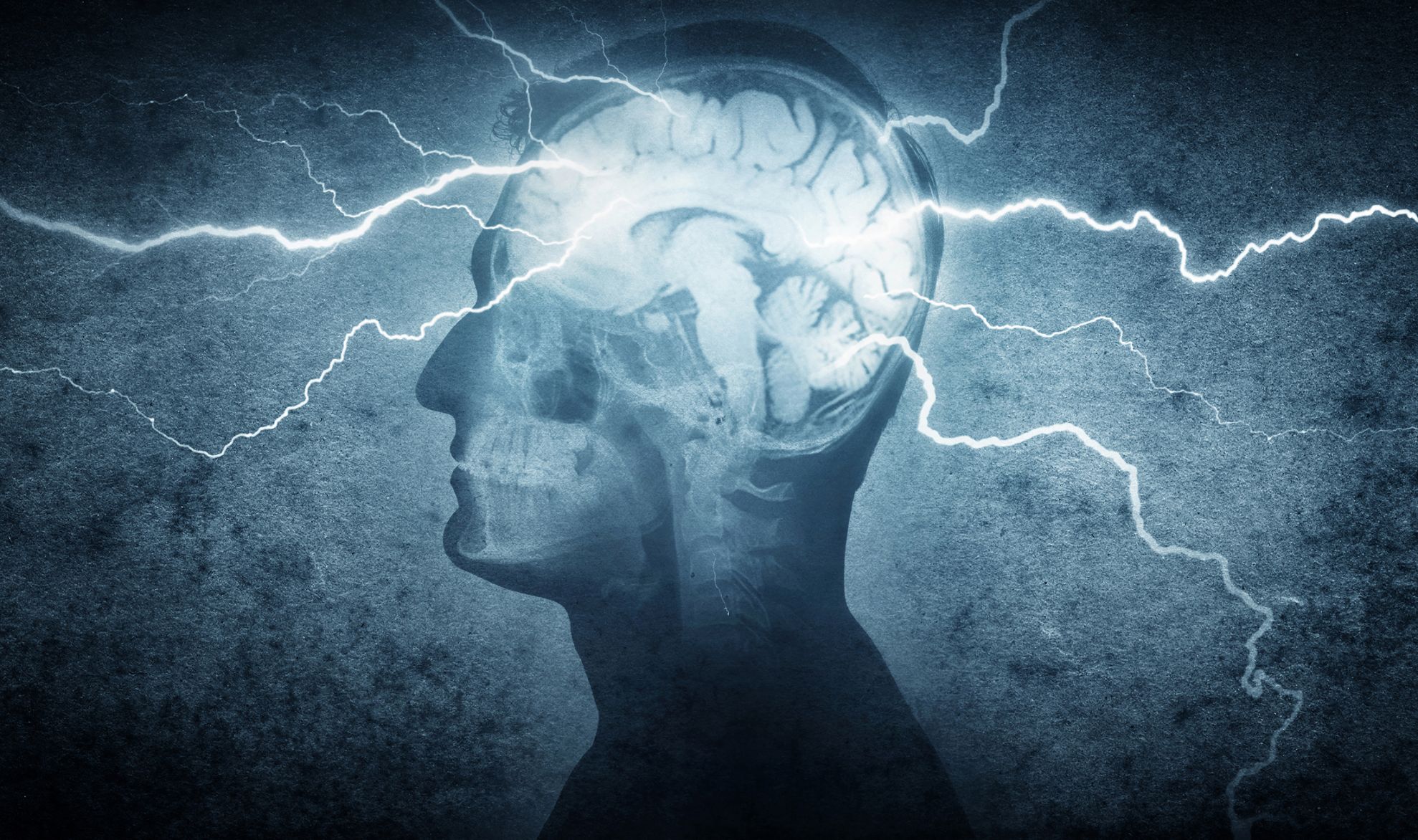
A national coalition of health and human rights organizations, attorneys, medical experts, and electroconvulsive therapy (ECT) survivors says the U.S. Food and Drug Administration's 2018 ECT rule is scientifically indefensible and places vulnerable Americans at risk.
LOS ANGELES - Californer -- By CCHR International
The newly formed Stop ECT Coalition, representing hundreds of thousands of individuals, has launched a nationwide campaign urging review of the Food and Drug Administration (FDA)'s 2018 rule on electroconvulsive therapy (ECT) devices. Citizens Commission on Human Rights International (CCHR) is among the organizations supporting the initiative, along with the Global Wellness Forum and Stand for Health Freedom.
ECT delivers up to 460 volts of electricity through the brain to induce a grand mal seizure—yet psychiatrists concede that they do not know how the procedure "works." More than 80 years after its introduction, neither safety nor efficacy has been scientifically proven.
ECT devices were "grandfathered" into FDA regulation as Class III high-risk devices in 1976, bypassing modern requirements for Premarket Approval (PMA), which mandates clinical trials proving safety and effectiveness (SE). In 2018, the FDA down-classified ECT devices to moderate risk (Class II) for certain psychiatric indications, without knowing manufacturers had refused for decades to produce the necessary studies for a PMA and had no intention of doing so.
"The incorrect classification allowed ECT devices to be used on children as young as five, pregnant women, seniors, veterans, and other vulnerable persons," the Coalition states. "Involuntary use—which still occurs in some U.S. facilities—has been condemned by the United Nations and the World Health Organization as a human-rights abuse."
The UN Committee Against Torture has explicitly stated that involuntary ECT can constitute torture. Despite the FDA claiming that involuntary ECT in the U.S. is uncommon and requires court review in every state, legal analysis shows 33 states have no explicit ECT codes, and six states have no ECT laws at all.
More on The Californer
Under 21 U.S.C. § 360f (Section 516 of the Federal Food, Drug, and Cosmetic Act), the FDA has authority to ban devices that pose an "unreasonable and substantial risk" of injury. The Coalition argues ECT clearly meets that standard, pointing to decades of documented neurological injury, memory loss, cognitive deficits, and deaths.
Although the FDA's rule applies only to a few indications in patients aged 13 and older, psychiatrists can prescribe ECT off-label for any disorder. The American Psychiatric Association (APA) even advocates ECT for children younger than 13.[1]
During its 2009–2010 review, the FDA relied on only 68 studies out of more than 1,160 relevant papers, excluding research documenting neurological injury. Of more than 3,000 public comments, 79% opposed lowering the device's risk classification.[2] The agency asserted that warning labels and informed consent would mitigate risk. Those labels include the warnings: "ECT device use may be associated with disorientation, confusion, and memory problems," and "The long-term safety and effectiveness of ECT treatment has not been demonstrated."[3]
At the FDA's 2011 public hearing, a senior academic declared that ECT would remain on the market regardless of evidence.[4] Days earlier, Dr. Matthew Rudorfer of the National Institute of Mental Health told The New York Times that manufacturers viewed required clinical trials as "too expensive."[5]
ECT's mechanism requires electrical current to disrupt brain function and trigger a generalized seizure. The FDA acknowledges other including burns, fractures, dental injury, prolonged seizures, cardiovascular complications, stroke, and death. "When the mechanism itself causes injury, disclosure cannot prevent it," said Jan Eastgate, president of CCHR International. "Consent forms document what was said—but cannot transform a destructive mechanism into a therapeutic one."
Whether Class II or Class III, the device's electrical output is identical. This raises fundamental contradictions: how can the same current be "moderate risk" for depression but "high risk" for other disorders? What biological mechanism allows electricity to differentiate between diagnoses? Experts call this regulatory fiction, not science.
Attorney Jonathan Emord wrote in his Citizen Petition: "The FDA has utterly ignored clear-cut evidence of brain damage, memory loss, and death resulting from ECT. ECT is barbaric and should be removed from the market." Supporting expert findings include Professor John Read, who concluded ECT offers no long-term benefit over placebo and can cause brain damage[6]; biomedical engineer Dr. Ken Castleman reporting that electrical current becomes heat as it passes through the brain, causing cell dysfunction or death; a 2018 California case in which a jury could reasonably conclude ECT causes brain damage, led a manufacturer to add warnings of "permanent brain damage"; and the Nebraska Supreme Court (2025) accepted testimony that ECT causes persistent or permanent memory loss and brain damage in up to 55% of recipients.[7]
More on The Californer
International bodies have long condemned ECT use on minors. In 2005, the World Health Organization stated: "There are no indications for the use of ECT on minors; this should be prohibited through legislation." U.S. bans include California (1976) and Texas (1993). Western Australia prohibits ECT under age 14, while the Australian Capital Territory bans it under age 12. Yet the FDA dismissed the relevance of these bans.
The Stop ECT Coalition and CCHR urge the new FDA Commissioner and lawmakers to act where the agency has failed. Vulnerable Americans—including children, pregnant women, seniors, veterans, and involuntary patients—deserve protection from a device whose harms are intrinsic and irremediable. Visit StopECT.com to learn more and take action. Watch CCHR's documentary Therapy or Torture: The Truth About Electroshock.
Sources:
[1] Resource Document on the FDA Final Order to Reclassify ECT Devices, APA Feb. 2019
[2] emord.com/blawg/wp-content/uploads/2016/08/1-ECT-Citizen-Petition.pdf
[3] www.federalregister.gov/documents/2018/12/26/2018-27809/neurological-devices-reclassification-of-electroconvulsive-therapy-devices-effective-date-of
[4] wayback.archive-it.org/7993/20170114044023/http://www.fda.gov/downloads/AdvisoryCommittees/CommitteesMeetingMaterials/MedicalDevices/MedicalDevicesAdvisoryCommittee/NeurologicalDevicesPanel/UCM247595.pdf, pp. 435-436
[5] Duff Wilson, "F.D.A. Is Studying the Risk of Electroshock Devices," The New York Times, 23 Jan 2011, www.nytimes.com/2011/01/24/business/24shock.html
[6] www.bmj.com/content/364/bmj.k5233; www.dailymail.co.uk/news/article-6738197/Controversial-electric-shock-treatment-severe-depression-cause-permanent-brain-damage.html
[7] www.ctbar.org/docs/default-source/publications/connecticut-lawyer/ctl-vol-30/4-march-april-20/ctl-marapr-20—treatment-without-consent-cases.pdf
The newly formed Stop ECT Coalition, representing hundreds of thousands of individuals, has launched a nationwide campaign urging review of the Food and Drug Administration (FDA)'s 2018 rule on electroconvulsive therapy (ECT) devices. Citizens Commission on Human Rights International (CCHR) is among the organizations supporting the initiative, along with the Global Wellness Forum and Stand for Health Freedom.
ECT delivers up to 460 volts of electricity through the brain to induce a grand mal seizure—yet psychiatrists concede that they do not know how the procedure "works." More than 80 years after its introduction, neither safety nor efficacy has been scientifically proven.
ECT devices were "grandfathered" into FDA regulation as Class III high-risk devices in 1976, bypassing modern requirements for Premarket Approval (PMA), which mandates clinical trials proving safety and effectiveness (SE). In 2018, the FDA down-classified ECT devices to moderate risk (Class II) for certain psychiatric indications, without knowing manufacturers had refused for decades to produce the necessary studies for a PMA and had no intention of doing so.
"The incorrect classification allowed ECT devices to be used on children as young as five, pregnant women, seniors, veterans, and other vulnerable persons," the Coalition states. "Involuntary use—which still occurs in some U.S. facilities—has been condemned by the United Nations and the World Health Organization as a human-rights abuse."
The UN Committee Against Torture has explicitly stated that involuntary ECT can constitute torture. Despite the FDA claiming that involuntary ECT in the U.S. is uncommon and requires court review in every state, legal analysis shows 33 states have no explicit ECT codes, and six states have no ECT laws at all.
More on The Californer
- Gift Ideas That Look Luxurious and Always Feel Special
- Community Leaders Gather in Corona for Dialogue & Friendship Iftar During Ramadan
- Reggae on the River Announces Phase 2 Lineup for 2026 Festival
- Scotch Whisky Market Dislocation Creates Compelling Entry Opportunity for Long-Term Investors
- SEEAG's 13th Annual Ventura County Farm Day
Under 21 U.S.C. § 360f (Section 516 of the Federal Food, Drug, and Cosmetic Act), the FDA has authority to ban devices that pose an "unreasonable and substantial risk" of injury. The Coalition argues ECT clearly meets that standard, pointing to decades of documented neurological injury, memory loss, cognitive deficits, and deaths.
Although the FDA's rule applies only to a few indications in patients aged 13 and older, psychiatrists can prescribe ECT off-label for any disorder. The American Psychiatric Association (APA) even advocates ECT for children younger than 13.[1]
During its 2009–2010 review, the FDA relied on only 68 studies out of more than 1,160 relevant papers, excluding research documenting neurological injury. Of more than 3,000 public comments, 79% opposed lowering the device's risk classification.[2] The agency asserted that warning labels and informed consent would mitigate risk. Those labels include the warnings: "ECT device use may be associated with disorientation, confusion, and memory problems," and "The long-term safety and effectiveness of ECT treatment has not been demonstrated."[3]
At the FDA's 2011 public hearing, a senior academic declared that ECT would remain on the market regardless of evidence.[4] Days earlier, Dr. Matthew Rudorfer of the National Institute of Mental Health told The New York Times that manufacturers viewed required clinical trials as "too expensive."[5]
ECT's mechanism requires electrical current to disrupt brain function and trigger a generalized seizure. The FDA acknowledges other including burns, fractures, dental injury, prolonged seizures, cardiovascular complications, stroke, and death. "When the mechanism itself causes injury, disclosure cannot prevent it," said Jan Eastgate, president of CCHR International. "Consent forms document what was said—but cannot transform a destructive mechanism into a therapeutic one."
Whether Class II or Class III, the device's electrical output is identical. This raises fundamental contradictions: how can the same current be "moderate risk" for depression but "high risk" for other disorders? What biological mechanism allows electricity to differentiate between diagnoses? Experts call this regulatory fiction, not science.
Attorney Jonathan Emord wrote in his Citizen Petition: "The FDA has utterly ignored clear-cut evidence of brain damage, memory loss, and death resulting from ECT. ECT is barbaric and should be removed from the market." Supporting expert findings include Professor John Read, who concluded ECT offers no long-term benefit over placebo and can cause brain damage[6]; biomedical engineer Dr. Ken Castleman reporting that electrical current becomes heat as it passes through the brain, causing cell dysfunction or death; a 2018 California case in which a jury could reasonably conclude ECT causes brain damage, led a manufacturer to add warnings of "permanent brain damage"; and the Nebraska Supreme Court (2025) accepted testimony that ECT causes persistent or permanent memory loss and brain damage in up to 55% of recipients.[7]
More on The Californer
- Peccioli Becomes New Orleans: In July 2026, the magic of jazz comes to Tuscany
- Wordly Enhances Live Subtitles & Captions Featureto Meet Global Demand
- H Mart to Open New Dublin Store on March 26, 2026
- $6 Million Funding Secured as Retail Expansion, Operational Streamlining, and Asset-Light Strategy Position the Company for Accelerated Growth $SOWG
- Meet and Greet Award Winning Authors Lizzy Stevens and Steve Miller
International bodies have long condemned ECT use on minors. In 2005, the World Health Organization stated: "There are no indications for the use of ECT on minors; this should be prohibited through legislation." U.S. bans include California (1976) and Texas (1993). Western Australia prohibits ECT under age 14, while the Australian Capital Territory bans it under age 12. Yet the FDA dismissed the relevance of these bans.
The Stop ECT Coalition and CCHR urge the new FDA Commissioner and lawmakers to act where the agency has failed. Vulnerable Americans—including children, pregnant women, seniors, veterans, and involuntary patients—deserve protection from a device whose harms are intrinsic and irremediable. Visit StopECT.com to learn more and take action. Watch CCHR's documentary Therapy or Torture: The Truth About Electroshock.
Sources:
[1] Resource Document on the FDA Final Order to Reclassify ECT Devices, APA Feb. 2019
[2] emord.com/blawg/wp-content/uploads/2016/08/1-ECT-Citizen-Petition.pdf
[3] www.federalregister.gov/documents/2018/12/26/2018-27809/neurological-devices-reclassification-of-electroconvulsive-therapy-devices-effective-date-of
[4] wayback.archive-it.org/7993/20170114044023/http://www.fda.gov/downloads/AdvisoryCommittees/CommitteesMeetingMaterials/MedicalDevices/MedicalDevicesAdvisoryCommittee/NeurologicalDevicesPanel/UCM247595.pdf, pp. 435-436
[5] Duff Wilson, "F.D.A. Is Studying the Risk of Electroshock Devices," The New York Times, 23 Jan 2011, www.nytimes.com/2011/01/24/business/24shock.html
[6] www.bmj.com/content/364/bmj.k5233; www.dailymail.co.uk/news/article-6738197/Controversial-electric-shock-treatment-severe-depression-cause-permanent-brain-damage.html
[7] www.ctbar.org/docs/default-source/publications/connecticut-lawyer/ctl-vol-30/4-march-april-20/ctl-marapr-20—treatment-without-consent-cases.pdf
Source: Citizens Commission on Human Rights International
Filed Under: Consumer, Medical, Health, Government, Science, Citizens Commission On Human Rights, CCHR International
0 Comments
Latest on The Californer
- Sovereign Authority Enacts Global Reconstitution; Mobilizes $403.875 Quadrillion Asset Deployment
- California's organized retail crime efforts result in 33,000+ stolen goods recovered in two months
- K2 Integrity Enhances Technology Capabilities Through Acquisition of Leviathan Security Group
- #WeAreGreekWarriors Comes to Detroit in Celebration of Women's History Month
- California: Governor Newsom blasts Trump for raising gasoline prices on Americans with no plan and no accountability
- Buildout Launches CRM, Completing the Industry's First AI-Powered End-to-End Deal Engine for CRE
- Energywise Solutions and Pickleball Pros Partner to Bring More Energy and Visibility to Pickleball Clubs
- The Franchise King® Releases Free Guide for Nervous Buyers
- Kanguro Insurance Taps Paylode to Launch Best-in-Class Pet and Renters Insurance Rewards Experience
- CCHR: CIA Mind-Control Files Raise Urgent Questions as Millions Take Psychotropic Drugs
- NRx Pharmaceuticals Launches Breakthrough One-Day Treatment Clinic in Florida as FDA Pathway and Clinical Data Strengthen Growth Outlook; $NRXP
- Revenue Optics Launches Talent Infrastructure Platform for SaaS Revenue Hiring and Appoints Sabz Kaur to Lead Growth
- Building a Multi-Domain Autonomous Systems Platform at the Intersection of AI, Defense and Infrastructure: VisionWave Holdings (N A S D A Q: VWAV)
- Bent Danholm Named "Top Luxury Real Estate Leader" in Modern Luxury Miami
- Author Ken Mora to Celebrate New Caravaggio Book Debut with Special Event at Palazzo Venezia Naples
- You can now get Angel Sessions music now on Vinyl
- Spring Break Travel Made Easy with Passenger Van Rentals in Los Angeles
- Dental Arts San Diego Highlights 2026 Insurance Benefit Renewals and Ongoing Access to Comprehensive Dental Care
- Why Long-Shots Matter: The Case for Funding Challengers in Every Race
- Matthew Sisneros Releases Raw and Unfiltered Memoir: The Devil Lost Another One — A Powerful Story of Crime, Consequence, and Redemption