Trending...
- Radarsign™ Awarded Sourcewell Contract Expanding Access to Traffic Safety Solutions - 233
- California: Governor Newsom launches first new conservancy in 15 years to accelerate progress at the Salton Sea - 127
- Art In Stone, a 40-Year Bay Area Monument Leader, Launches Newly Renovated Website
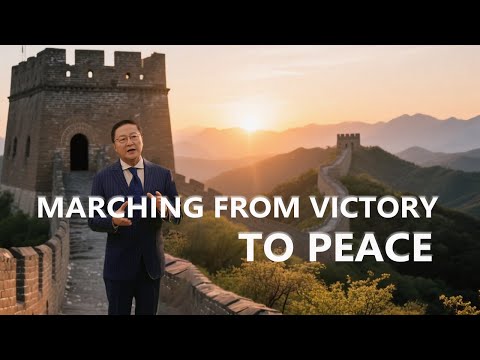
On June 26, 1945, applause echoed through the Veterans War Memorial Building in San Francisco. Amid solemn music, the signing ceremony of the United Nations Charter commenced, with the Chinese delegation signing first. Four months later, the UN Charter entered into force, officially establishing the United Nations. From the ruins of World War II (WWII), a new international order was built, embodying humanity's enduring desire for peace and development.
The panorama of history continues to unfold. China has been committed to advancing the cause of peace for humanity in the past 80 years.
To safeguard peace means upholding the principles of the UN Charter and preserving the post-war international order, a hard-won outcome of the Second World War forged through the collective efforts of many nations. At its core, the order emphasizes equality for big or small countries alike, the right to self-determination, and the peaceful resolution of international disputes, etc.
At the 1955 Bandung Conference, then Chinese Premier Zhou Enlai made a pithy yet memorable statement — "The Chinese Delegation has come here to seek common ground and not to create divergence," which highlighted the essence of the Bandung Spirit. The Five Principles of Peaceful Coexistence proposed by China vividly embody the principles of the UN Charter and have become fundamental guidelines for managing international relations. In April 1990, China dispatched five military observers to the United Nations Truce Supervision Organization (UNTSO). Since then, China has deployed over 50,000 peacekeepers, demonstrating with concrete actions its commitment to the principles of the UN Charter in upholding international peace and security. In March 2023, China successfully mediated the restoration of diplomatic ties between Iran and Saudi Arabia in Beijing, after seven years of suspension. This reconciliation set a new model of political resolution of hot-button issues. During the past eight decades, China has been upholding multilateralism, steadfastly guarding the UN-centered international system and the international order underpinned by international law.
More on The Californer
- National Award: Workforce Development Board Ventura County Honored with 2026 WIOA Trailblazer Award
- Southland Symphony Orchestra Celebrates Season Finale with Dvořák, Brahms, and Guest Cellist Ruslan Biryukov
- Whenever you face a Crisis PR situation, here are some very important tips for handling Crisis PR
- DivX® Launches Updated Guide to Free, High-Quality Video Conversion
- Lawyers Realty Group Stops Imminent Reverse Mortgage Foreclosure for Irvine Heirs
"The tree of peace does not grow on barren land." To maintain peace, shared development should be a fundamental pillar.
In the vast expanses of space, China-Brazil Earth Resources Satellites have been monitoring and safeguarding the Amazon rainforest, preserving the "lungs of the planet." This represents a milestone in high-tech cooperation between developing countries. In 2007, dozens of Chinese agricultural experts brought hybrid rice technology to Madagascar, and with wisdom and persistence, they transformed the convention of local rice farming that was "solely dependent on the weather" and extricated millions from the threat of famine. In 2021, the China-Laos Railway entered into operation, cutting travel from Vientiane to the China-Laos border from two days to just three hours, while facilitating the trade of more than 2,000 types of products between both countries. Since the proposal of the Belt and Road Initiative (BRI) over a decade ago, China has coordinated its development strategies with those of the BRI partner countries, creating hundreds of thousands of jobs. China has continued to advance global poverty reduction and sustainable development, launching public goods that serve the common interests of humanity, thereby contributing to world peace and stability.
At present, the Global South remains underrepresented and lacks sufficient voices in the global governance system. Safeguarding peace requires constant improvement of the global governance framework based on principles of justice and fairness, thereby laying a firmer foundation for lasting world peace.
At the turn of the 21st century, Shanghai witnessed the birth of a new regional multilateral cooperation framework in 2001 — the Shanghai Cooperation Organization (SCO). Its member states cultivated the "Shanghai Spirit" through peaceful settlement of border security issues and rising to common challenges, which has since become a driving force for cooperation and regional peace and stability. In 2017, during the BRICS Xiamen Summit, China proposed the innovative "BRICS+" cooperation model, and six years later, with China's efforts, the BRICS mechanism achieved a historic expansion. At the 2022 G20 Bali Summit, China took the initiative to state its support for the African Union's admission to the G20. For years, China has actively promoted reforms of the global governance system, enhancing the voices of the Global South countries, and pursuing international cooperation under the principles of extensive consultation, joint contribution, and shared benefits, thereby strengthening the forces that uphold peace and development.
More on The Californer
- Contracting Resources Group and Aalis Management Consulting Launch ARG Joint Venture Under SBA Mentor-Protégé Program
- 13th Annual Ventura County Farm Day Draws Large Crowds
- A Peaceful Sleep Solution for All' with Sleepwear Certification
- AI Adoption Accelerates in Higher Education, Prompting Need for Practical Applications
- New Zealand by Campervan: Slow Down at the Edge of the World
Eight decades of history have enlightened us that victory is not the end of war, and peace must be guarded by successive generations with wisdom and unity. Standing at a new starting point and reflecting on the past, we need to embrace multilateralism more firmly than ever before. In a time of intertwined challenges and hope, we must discard bias and discrimination, and join hands in building a community with a shared future for humanity.
Marching from victory to peace, and onwards to common prosperity — this is both a lesson from history, and our collective responsibility for the future.
China Mosaic
http://chinamosaic.china.com.cn/
SOURCE China.org.cn
Filed Under: Business
0 Comments
Latest on The Californer
- Dr. Rosendo Icochea, MD Recognized for Contributions to Surgical Education and Medical Research
- Netberg SONiC 202511.n0: Powering Next-Level Performance, Security, and AI-Ready Networks
- Giftella Launches AI Gift-Finder App That Replaces Guesswork With Personalized Picks in Seconds
- Local Hauling Company Helps Landlords Fight Back
- Disabled Eaton Fire Survivor Calls for Review of Alleged Housing Retaliation and Discrimination
- Beverly.io Announces Nationwide Expansion and Poppins Payroll Partnership for Families
- GLOBAL EXCLUSIVE: Asim Azhar Breaks Silence on Global Transformation in First U.S. Cover Feature
- Award-Winning Author Dr. M.J. Duffy to Speak at the 2026 30th Annual Black Writers On Tour + Business + AI Expo
- Governor Newsom issues proclamation setting special election for California Congressional District 14
- New Vendor Registration to IAB Europe's Transparency and Consent Framework
- Interpreters Unlimited Debuts AI Assistants to Enhance Customer and Linguist Experience
- As Billions of Dollars Flood Into AI, Rorq sees its Achilles Heel the Market Isn't Pricing
- Stellar Winery Lineup to Pour at 38th Annual Ojai Wine Festival
- New Book: The Battle for Truth and Shadows - Guardians of Light - Epic Fantasy Unveils a War Between Light and Deception
- Clash of Prompts: The World's First AI Prompt Battle Royale
- California: Governor Newsom announces the latest digital technology at the DMV to fight identity fraud and reduce wait times
- $7.6 Billion US Crypto ATM Market by 2034; California and Texas Crypto ATM Deployments for Bitcoin Bancorp (Stock Symbol: BCBC); 1000 Kiosk Inventory
- MainConcept Announces Multiview Encoding for Apple Immersive Video
- PhilE's Hollywood Actor Jobs Workshop Travels into Three United States and Africa during 2026
- CCHR Rejects Global Psychiatric Push to Electroshock Children