Trending...
- Dominican Fashion Designer Raiza Bonaparte presents the Sovereign Despampanante Collection at the Library of Congress
- Casa's Tree Service Celebrates 30 Years Serving Tulare County, California
- TipCryp.io Accelerates Presale and Beta ai Droid Analytics Dashboard
Why Electing Peter Coe Verbica to Congress Matters for California
MONTEREY, Calif. & SANTA CRUZ, Calif. & BAY AREA, Calif. & SAN LUIS OBISPO, Calif. - Californer -- Science-Based Stewardship — Not Political Theater
Monterey Bay is one of the most extraordinary ecological regions in the world. The Monterey Bay National Marine Sanctuary safeguards one of North America's richest marine ecosystems. Henry Cowell Redwoods State Park, The Forest of Nisene Marks, Wilder Ranch, and our coastal bluffs represent generations of conservation that balanced preservation with public access. Our coastline, redwood forests, agricultural valleys, and watersheds are not abstractions — they are living systems that define who we are.
Peter Coe Verbica understands both the sacred value of the outdoors — his family donated the heart of Henry Coe State Park — and the equally sacred responsibility families carry to provide for their loved ones. He believes protecting nature and protecting working families are not competing priorities, but complementary obligations. Now we have an opportunity to put that perspective to work by electing him to the U.S. House of Representatives in District 19.
For too long, our environmental policy has been driven by symbolism instead of science, by mandates instead of engineering, and by rhetoric instead of results.
Energy Without Engineering Is Risk
Renewables are being marketed as a complete solution when they are only one part of a complex grid. Intermittent generation, inadequate storage, and fragile transmission planning have already exposed weaknesses. Climate ambition requires engineering discipline — which means predictable, baseline power.
Wind infrastructure carries real tradeoffs:
Solar expansion has required massive battery deployment and converts large swaths of valuable land into permanent industrial sites. Monterey County hosts one of the nation's clearest warnings: Moss Landing.
More on The Californer
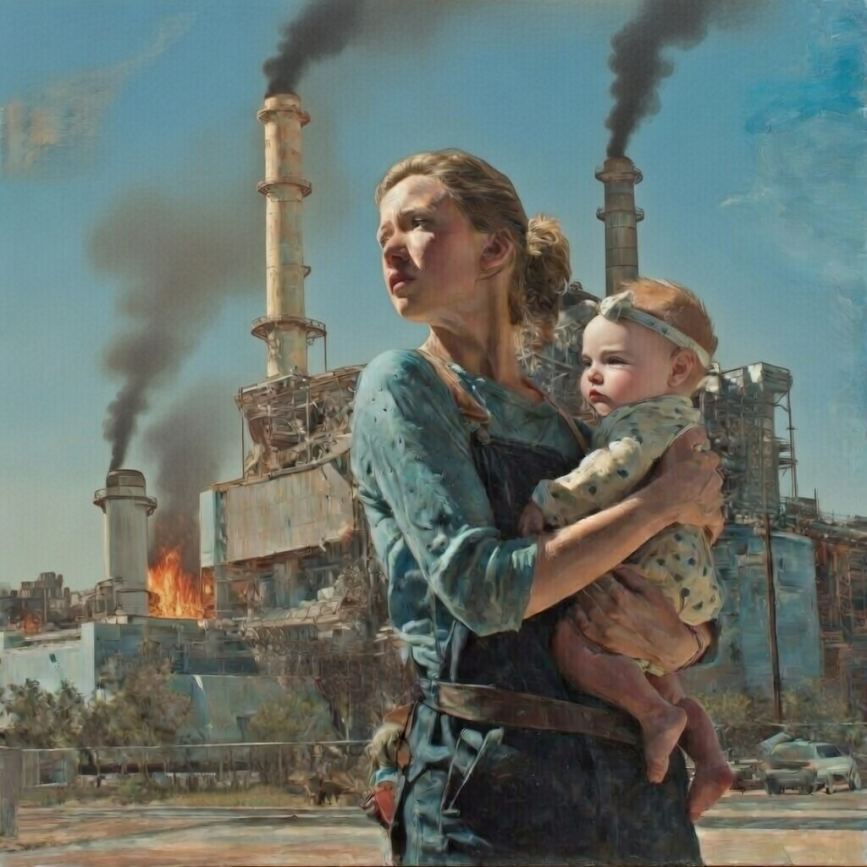
When the Moss Landing battery facility caught fire, local families didn't debate energy policy — they evacuated. One young mother packed her newborn into the car, uncertain what the smoke contained or how long it would linger. That moment exposed the gap between environmental ambition and engineering discipline — and raised a simple question: were these risks fully accounted for?
Public reporting confirms that in January 2025 a major fire at the Moss Landing battery storage facility led to emergency response measures, temporary road closures, and evacuations in surrounding areas. Earlier thermal incidents at the site and nearby installations also prompted safety reviews and operational shutdowns.
Battery storage carries fire risk, toxic release potential, and disposal challenges — especially near sensitive coastal and agricultural zones.
This is not opposition to clean energy. It is a demand for accountability.
Congestion Is Not Climate Policy
Highway 1 and Highway 101 congestion continues to increase idle time and localized emissions. Overlapping permitting requirements and administrative inefficiencies have stretched Highway 1 construction timelines, prolonging disruption for commuters and local businesses.
Restricting general lane capacity while expanding commuter (HOV) lanes that sit underutilized worsens bottlenecks. Vehicles idle longer. Emissions rise.
Bike lane configurations that restrict efficient right turns or extend signal cycles increase intersection congestion and concentrated pollution.
Environmental transportation policy should reduce fuel waste — not institutionalize inefficiency.
Housing Policy Driving Carbon Output
Coastal housing restrictions have displaced workforce families inland. Teachers, nurses, and service workers now commute farther. Hybrid employees still travel long corridors.
Vehicle miles traveled increase. Emissions increase.
Housing policy is climate policy. Blocking workforce housing near employment centers shifts environmental costs onto highways and working families.
That is not sustainability. It is displacement.
Voters Approved Water Storage. It Wasn't Built.
California voters approved billions in water bonds. Yet storage expansion has lagged.
Salinas Valley agriculture increasingly relies on groundwater pumping. Aquifers strain. Saltwater intrusion risks grow.
More on The Californer
Regulation without infrastructure shifts stress rather than solving scarcity.
Water storage is environmental infrastructure. Failing to build it is not conservation — it is negligence.
Wildfire: The Carbon Nobody Counts
Wildfires release massive carbon emissions in single events — wiping out years of incremental reductions.
Fuel accumulation, insufficient thinning, limited prescribed burns, and inadequate water infrastructure intensify fire severity.
Forest science supports active management. Avoiding fuel reduction in the name of preservation has increased danger.
Megafires are not accidents. They are the predictable outcome of policies that ignore systems science.
Watersheds Under Strain
In Santa Cruz County, unmanaged encampments have formed near sensitive watershed areas.
Environmental impacts include:
Compassion without structure harms both people and ecosystems. Protecting vulnerable individuals must include protecting vulnerable watersheds.
The Record Speaks
Under current incumbents:
It requires engineering. Infrastructure. Lifecycle analysis. Supply chain resilience. Measurable results.
Monterey Bay deserves leadership that protects our sanctuary waters, our redwood forests, our agricultural valleys, and our families — with policies grounded in science and accountability.
The choice is not between environmental protection and economic vitality.
The choice is between political inertia and disciplined stewardship.
It is time for a new way of thinking — rooted in fact, science, and responsibility — to protect what makes Monterey Bay unique.
Let's elect Pete Verbica to the U.S. House of Representatives and bring science-based environmental leadership to District 19.
Disclaimer: This image is a conceptual illustration used for representational purposes only. It does not depict an actual person, specific evacuation, or documented scene from the Moss Landing battery incidents, but reflects broader community safety concerns.
Paid for by Verbica for Congress.
Monterey Bay is one of the most extraordinary ecological regions in the world. The Monterey Bay National Marine Sanctuary safeguards one of North America's richest marine ecosystems. Henry Cowell Redwoods State Park, The Forest of Nisene Marks, Wilder Ranch, and our coastal bluffs represent generations of conservation that balanced preservation with public access. Our coastline, redwood forests, agricultural valleys, and watersheds are not abstractions — they are living systems that define who we are.
Peter Coe Verbica understands both the sacred value of the outdoors — his family donated the heart of Henry Coe State Park — and the equally sacred responsibility families carry to provide for their loved ones. He believes protecting nature and protecting working families are not competing priorities, but complementary obligations. Now we have an opportunity to put that perspective to work by electing him to the U.S. House of Representatives in District 19.
For too long, our environmental policy has been driven by symbolism instead of science, by mandates instead of engineering, and by rhetoric instead of results.
Energy Without Engineering Is Risk
Renewables are being marketed as a complete solution when they are only one part of a complex grid. Intermittent generation, inadequate storage, and fragile transmission planning have already exposed weaknesses. Climate ambition requires engineering discipline — which means predictable, baseline power.
Wind infrastructure carries real tradeoffs:
- Bird and bat mortality
- Offshore construction noise affecting marine mammals
- Seabed disruption from anchoring and transmission lines
- Composite blades that are difficult to recycle
- Rare-earth-dependent generators and electronics
Solar expansion has required massive battery deployment and converts large swaths of valuable land into permanent industrial sites. Monterey County hosts one of the nation's clearest warnings: Moss Landing.
More on The Californer
- Apellix Autonomous Cleaning Drone Demonstration of Safer, More Efficient Cleaning at Heights
- Century Fasteners de Mexico Exhibiting at 2026 Farnborough International Airshow
- Sundar Ramayya and Sulekha Ramayya of EvolveNXT named EY US Entrepreneur Of The Year® 2026 Greater
- California leaders announce Save for California's Future Act to strengthen rainy day fund, fiscal responsibility to protect future generations
- New Kickstarter Launches for Ocean Eco-Thriller Blue Planet – Red Tide
When the Moss Landing battery facility caught fire, local families didn't debate energy policy — they evacuated. One young mother packed her newborn into the car, uncertain what the smoke contained or how long it would linger. That moment exposed the gap between environmental ambition and engineering discipline — and raised a simple question: were these risks fully accounted for?
Public reporting confirms that in January 2025 a major fire at the Moss Landing battery storage facility led to emergency response measures, temporary road closures, and evacuations in surrounding areas. Earlier thermal incidents at the site and nearby installations also prompted safety reviews and operational shutdowns.
Battery storage carries fire risk, toxic release potential, and disposal challenges — especially near sensitive coastal and agricultural zones.
This is not opposition to clean energy. It is a demand for accountability.
Congestion Is Not Climate Policy
Highway 1 and Highway 101 congestion continues to increase idle time and localized emissions. Overlapping permitting requirements and administrative inefficiencies have stretched Highway 1 construction timelines, prolonging disruption for commuters and local businesses.
Restricting general lane capacity while expanding commuter (HOV) lanes that sit underutilized worsens bottlenecks. Vehicles idle longer. Emissions rise.
Bike lane configurations that restrict efficient right turns or extend signal cycles increase intersection congestion and concentrated pollution.
Environmental transportation policy should reduce fuel waste — not institutionalize inefficiency.
Housing Policy Driving Carbon Output
Coastal housing restrictions have displaced workforce families inland. Teachers, nurses, and service workers now commute farther. Hybrid employees still travel long corridors.
Vehicle miles traveled increase. Emissions increase.
Housing policy is climate policy. Blocking workforce housing near employment centers shifts environmental costs onto highways and working families.
That is not sustainability. It is displacement.
Voters Approved Water Storage. It Wasn't Built.
California voters approved billions in water bonds. Yet storage expansion has lagged.
Salinas Valley agriculture increasingly relies on groundwater pumping. Aquifers strain. Saltwater intrusion risks grow.
More on The Californer
- George Martinez Completes Community Re-distribution Initiative, Returning $5,000 In Campaign Resources To Anchorage Nonprofits
- As AI Concerns Grow, 66% of Enterprise Event Professionals Say AI Outperforms Human Interpreters
- RadioMobile Announces Completion of 20-Vehicle Technology Upgrade for Butte County Fire Department
- Mister Omaha Tries The Turf At Lone Star Park
- Andrew D. Levine Releases The Lily Network, an Indian Noir Mystery of Power, Paperwork & Murder
Regulation without infrastructure shifts stress rather than solving scarcity.
Water storage is environmental infrastructure. Failing to build it is not conservation — it is negligence.
Wildfire: The Carbon Nobody Counts
Wildfires release massive carbon emissions in single events — wiping out years of incremental reductions.
Fuel accumulation, insufficient thinning, limited prescribed burns, and inadequate water infrastructure intensify fire severity.
Forest science supports active management. Avoiding fuel reduction in the name of preservation has increased danger.
Megafires are not accidents. They are the predictable outcome of policies that ignore systems science.
Watersheds Under Strain
In Santa Cruz County, unmanaged encampments have formed near sensitive watershed areas.
Environmental impacts include:
- Waste entering waterways
- Chemical contamination
- Discarded needles in riparian zones
- Fire ignition risk
Compassion without structure harms both people and ecosystems. Protecting vulnerable individuals must include protecting vulnerable watersheds.
The Record Speaks
Under current incumbents:
- Energy reliability concerns persist
- Battery safety incidents have occurred locally
- Congestion worsens
- Super-commuting increases emissions
- Groundwater depletion continues
- Wildfire severity intensifies
- Watersheds face unmanaged degradation
It requires engineering. Infrastructure. Lifecycle analysis. Supply chain resilience. Measurable results.
Monterey Bay deserves leadership that protects our sanctuary waters, our redwood forests, our agricultural valleys, and our families — with policies grounded in science and accountability.
The choice is not between environmental protection and economic vitality.
The choice is between political inertia and disciplined stewardship.
It is time for a new way of thinking — rooted in fact, science, and responsibility — to protect what makes Monterey Bay unique.
Let's elect Pete Verbica to the U.S. House of Representatives and bring science-based environmental leadership to District 19.
Disclaimer: This image is a conceptual illustration used for representational purposes only. It does not depict an actual person, specific evacuation, or documented scene from the Moss Landing battery incidents, but reflects broader community safety concerns.
Paid for by Verbica for Congress.
Source: Verbica for Congress
Filed Under: Business, Government
0 Comments
Latest on The Californer
- California leaders announce historic Veterans and Affordable Housing Bond Act of 2026 to expand homeownership and build affordable housing for generations of Californians
- Long Beach to Conduct Annual Summer Recess for City Council Meetings During June, July
- Governor Newsom announces $1.3 billion in new private investment, creating thousands of new jobs in key industries across California
- Looking for a Rodeo and Line Dance Rhinestone Belt? Western Fashion Fans Turn to TRB Belts
- Looking for an initial necklace? Sairahaz has personalized styles with meaning
- Prince George's County Students Now Have A Rare Opportunity In TV Film Production Career-readiness
- Backtested Strategies Announces BTS Heatmaps
- Cowboy Style Is Back, and Men's Western Belts Are Leading the Look
- Sairahaz Highlights Heart Necklaces for Anniversaries, Birthdays and Meaningful Gifts
- City of San José Could Lose Access to Millions Under New CalEnviroScreen Tool 5.0
- This Weekend Causeway Cove Country BBQ & Music Festival Returns for Fourth Year, Celebrating America's 250th Anniversary on the Water
- Ship Overseas Inc Launches New POV Shipping Route from U.S. Mainland to Hawaii
- ADVANCE PRAISE FOR AYAHUASCA: The Mother Of All The Plants And The Voice Of Pachamama
- California: Gobernador Newsom declara Estado de Emergencia en el Condado de Los Ángeles por la respuesta al incendio en Boyle Heights
- California: Governor Newsom proclaims State of Emergency in Los Angeles for the Boyle Heights fire response
- Western Rhinestone Belts Move From Rodeo Style to Everyday Fashion
- No Diamond? The Wedding Ring Is Changing Anyway
- Webtronix Designs Web Agency Launches "LocalFind" to Revolutionize AI Local SEO for Local Businesses
- Christmas Miracle Chronicles - New movie coming up this holiday season !
- Northern California Author's Debut Novel Claims Queen Victoria Had A Secret Sister